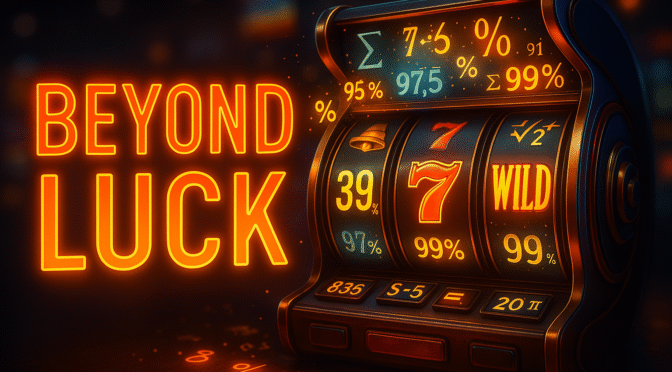
Introduction: More Than Just Spinning Reels
For most players, slot machines feel like pure luck—press a button, watch the reels spin, and hope for a win. But behind the flashing lights and jackpot sounds lies a world of mathematics and probability that determines every outcome. Casinos rely on this math to ensure profits, but players who understand the numbers can play smarter, stretch their bankroll, and increase their odds of hitting something big.
The Core Math Behind Slots
1. Random Number Generators (RNGs)
Every spin is powered by an RNG, a computer algorithm that generates random outcomes. This ensures fairness but also makes results completely unpredictable.
Key point: Slots don’t “remember” past spins, so hot/cold streaks are illusions.
2. Return to Player (RTP)
RTP represents the percentage of all wagers a slot is designed to return over time.
- A 97% RTP means that, on average, $97 is paid back for every $100 wagered.
- Higher RTP slots give players better long-term value.
3. Volatility and Variance
- Low Volatility: Frequent small wins.
- High Volatility: Rare but massive payouts.
Understanding volatility helps players choose games that fit their risk tolerance.
Why Casinos Don’t Talk About the Math
Casinos market the excitement of slots, not the math. Why?
- RTPs and volatility figures reveal just how much advantage the house holds.
- Near-misses and bonus animations are designed to distract from the statistical reality.
- The psychology of “just one more spin” keeps players engaged, even when the odds are against them.
How to Use Math to Your Advantage
1. Always Check RTP
Stick to slots with 96%+ RTP for the best long-term return. Many online platforms publish RTP openly—use that knowledge.
2. Choose the Right Volatility
- Casual players → Low volatility games for steady play.
- Jackpot chasers → High volatility slots for massive potential.
3. Bankroll Management
Mathematics shows that longer play increases exposure to the house edge. Setting limits and pacing bets is key to lasting longer.
4. Maximize Bonuses
Casino bonuses (free spins, deposit matches) offset the house edge by giving you more chances to play without spending more.
The Illusion of Luck vs. The Reality of Math
Slots may feel like luck-driven games, but every spin is rooted in probability, percentages, and payout structures. The house always maintains an edge, but informed players can tilt the experience more in their favor.
The biggest secret? Casinos don’t mind small winners—they thrive on the math that ensures they win overall.
Conclusion: Knowledge Is Power
Slots will always involve chance, but they’re far from random magic. Behind every reel is a system of math casinos don’t want you to think about. By learning RTP, volatility, and bankroll strategy, players can move beyond luck and approach slots with smarter play.
While the house always has the advantage, those who understand the math stand the best chance of enjoying—and maybe even beating—the game.